
- Email: info@completewd.com
- Phone: 705.735.0988
- Address: 53 Churchill Drive, Unit 1
Barrie, Ontario, Canada, L4N 8Z5 -
Hours:
Mon-Thurs: 8:00am - 5:00pm
Fri: 8:00am - 4:00pm
Sat-Sun: Closed

When homeowners think about replacing their windows, they often focus on improving comfort, updating their home's appearance, or lowering energy bills. But there's another important benefit that doesn't always get the attention it deserves: the positive impact energy-efficient windows can have on the environment.
Every home requires energy to stay comfortable throughout the year. In Ontario, heating during cold winters and cooling during hot summers can account for a significant portion of household energy use.
By choosing energy-efficient window replacements, homeowners can reduce unnecessary energy consumption, make better use of their heating and cooling systems, and take a meaningful step toward a more environmentally responsible home.
Small Home Improvements Can Make a Big Difference
Creating a more environmentally friendly home doesn't always require major renovations or expensive technology.
Sometimes, the most meaningful improvements come from upgrading the parts of your home that affect everyday energy consumption.
Windows are an important part of your home's exterior envelope, helping separate your comfortable indoor environment from changing outdoor conditions.
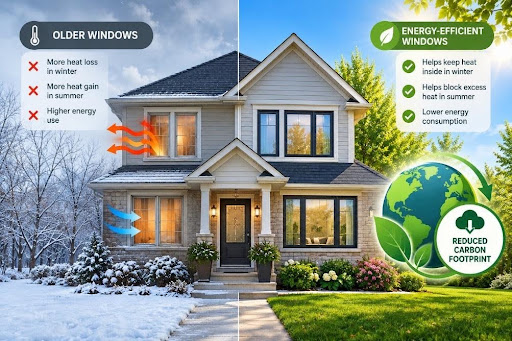
Older or poorly performing windows can allow unwanted heat transfer and air leakage, forcing heating and cooling systems to work harder to maintain comfortable temperatures.
Replacing these windows with modern, energy-efficient options can help reduce unnecessary energy use over time.
Reducing Your Home's Carbon Footprint
Every home has a carbon footprint associated with the energy it consumes.
Depending on how that energy is generated, heating and cooling your home can contribute to greenhouse gas emissions.
Energy-efficient windows help address this by reducing the amount of heating and cooling your home requires.
For example:
- During winter, better-insulated windows help limit heat escaping outdoors.
- During summer, appropriate glass coatings can help reduce unwanted solar heat gain.
- Improved sealing helps prevent conditioned air from escaping through gaps around the windows.
The environmental impact will vary depending on your home's heating system, electricity source, and existing windows. However, reducing unnecessary energy consumption is an important part of making homes more sustainable.
Making Better Use of the Energy We Already Produce
One of the most overlooked aspects of energy efficiency is that conserving energy can be just as important as producing it.
When a home loses heat through inefficient windows, additional energy is required to replace that warmth.
The same principle applies during summer when air conditioning systems work to remove unwanted heat.
Energy-efficient windows help reduce this unnecessary demand.
Rather than constantly compensating for heat loss or heat gain, your home's heating and cooling equipment can operate under more favourable conditions.
This means homeowners can make better use of the energy they're already consuming without sacrificing indoor comfort.
How Window Technology Supports Sustainability
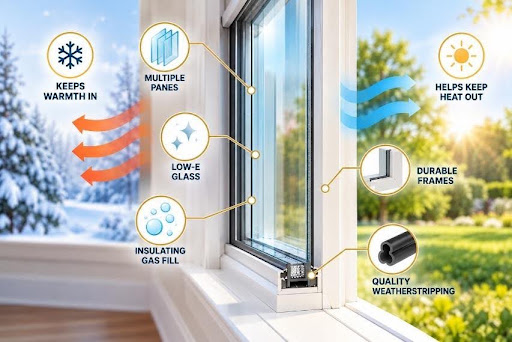
Modern energy-efficient window replacements incorporate several features designed to improve thermal performance.
These technologies work together to help control heat transfer and maintain more consistent indoor temperatures.
Some important features include:
- Low-E glass: Special coatings help control radiant heat transfer through the window.
- Insulated glass units: Multiple panes separated by insulating spaces help reduce heat movement.
- Insulating gas fills: Certain glass packages use gases such as argon to improve insulation.
- Well-designed frames: Frame construction contributes to the overall thermal performance of the window.
- Quality weatherstripping: Proper seals help reduce unwanted air infiltration.
While each feature has its own purpose, the greatest benefit comes from how the complete window system performs.
Helping Reduce Peak Energy Demand
Energy consumption doesn't remain constant throughout the day or year.
During periods of extreme heat or cold, many homes require additional energy at the same time.
This creates periods of increased demand for energy infrastructure.
By reducing the heating and cooling required to maintain comfortable indoor temperatures, energy-efficient windows can contribute to lowering a home's energy demand during these periods.
Although one window replacement project won't transform the energy grid, efficiency improvements across many homes can collectively make a difference.
This is one reason residential energy efficiency plays an important role in broader environmental sustainability efforts.
Long-Lasting Windows Can Help Reduce Material Waste
Environmental responsibility isn't only about how much energy a product saves. It's also about how long that product lasts.
Windows require raw materials, manufacturing, transportation, and installation. Replacing them unnecessarily creates additional material consumption and waste.
That's why choosing durable, well-constructed windows is important.
Quality materials, proper installation, and regular maintenance can help extend the useful life of replacement windows.
The longer a window continues performing effectively, the longer homeowners can benefit from the materials and resources used to manufacture it.
What Happens to Your Old Windows?
When replacing windows, it's worth considering what happens to the materials being removed.
Old windows may contain several different components, including glass, vinyl, aluminum, steel, wood, hardware, and sealants.
Some of these materials may be recyclable, depending on their condition and the recycling facilities available.
However, not every component can be processed through regular municipal recycling programs. Separation and specialized handling may be required.
Homeowners interested in reducing renovation waste can ask their installation company about disposal practices and whether any materials can be directed to appropriate recycling facilities.
Responsible waste management is another consideration when planning a home improvement project.
Energy Efficiency Is About the Whole Home
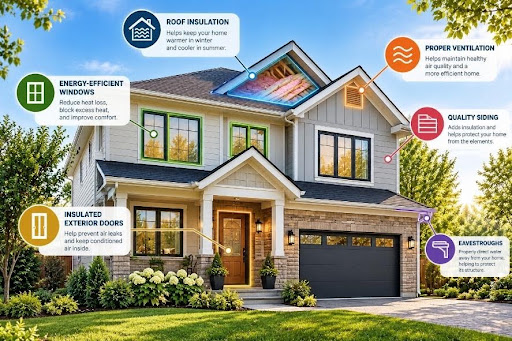
Even the most advanced windows are only one part of an energy-efficient home.
Insulation, exterior doors, ventilation, air sealing, and heating and cooling equipment all influence overall energy consumption.
For example, window installations can improve thermal performance, but significant air leaks elsewhere in the home may continue to waste energy.
Thinking about your home as a complete system can help you prioritize improvements that work together.
This approach is particularly valuable when planning multiple exterior renovations over time.
Why ENERGY STAR Certification Matters
When comparing replacement windows, homeowners may come across products carrying the ENERGY STAR certification.
In Canada, ENERGY STAR-certified windows meet established energy-performance requirements.
These products are evaluated using performance characteristics such as insulation and solar heat gain.
Certification can help homeowners identify products designed to meet recognized efficiency standards rather than relying solely on marketing claims.
It's also important to compare the actual performance ratings of different windows, since certified products can have different specifications.
Choosing a window with the right performance characteristics for your home and Ontario's climate can help support your energy-efficiency goals.
Sustainable Choices Don't Have to Sacrifice Style
Choosing energy-efficient windows doesn't mean homeowners have to compromise on appearance.
Modern replacement windows are available in a variety of styles, configurations, colours, and finishes.
Whether your home has a traditional design or a more contemporary appearance, you can explore window options that complement its architecture while offering improved thermal performance.
The goal is to find a balance between appearance, functionality, durability, and efficiency.
A well-planned window replacement can improve the look of your home while helping reduce its ongoing energy requirements.
Making an Environmentally Responsible Investment
It's important to recognize that manufacturing and installing new windows also has an environmental impact.
That means replacing every functioning window isn't automatically the most sustainable choice.
If your existing windows are in good condition and performing well, maintenance and repairs may help extend their useful life.
However, when windows are significantly deteriorated, poorly insulated, or nearing the end of their service life, replacing them with higher-performing products can provide long-term benefits.
The most responsible decision considers the condition of the existing windows, expected energy improvements, product durability, and the resources required for replacement.
Building a More Sustainable Home Starts With Smart Choices
Creating a more environmentally responsible home doesn't happen overnight.
It's often the result of thoughtful improvements made over time, from reducing unnecessary energy use to choosing durable materials that are built to last.
Energy-efficient windows can be one part of that process, helping homeowners improve thermal performance while reducing the energy required to keep their homes comfortable.
At Complete Windows & Doors, we help homeowners throughout Barrie, Simcoe County, and into Muskoka explore replacement window options that suit their homes, preferences, and performance goals.
Whether you're replacing aging windows or planning a larger exterior renovation, choosing quality products and professional installation can help you make an investment that benefits your home for years to come.
Frequently Asked Questions
How do energy-efficient windows help the environment?
They help reduce the energy needed to heat and cool your home, which can lower greenhouse gas emissions depending on your energy sources.
Are triple-pane windows more environmentally friendly?
Triple-pane windows can provide better insulation than comparable double-pane options, potentially reducing energy consumption. Their overall environmental benefit depends on the home and product.
Is replacing old windows always better for the environment?
Not always. If your windows are performing well, maintaining them may be more sustainable. Replacement becomes worth considering when windows are deteriorating or performing poorly.
October 8th, 2026