
- Email: info@completewd.com
- Phone: 705.735.0988
- Address: 53 Churchill Drive, Unit 1
Barrie, Ontario, Canada, L4N 8Z5 -
Hours:
Mon-Thurs: 8:00am - 5:00pm
Fri: 8:00am - 4:00pm
Sat-Sun: Closed
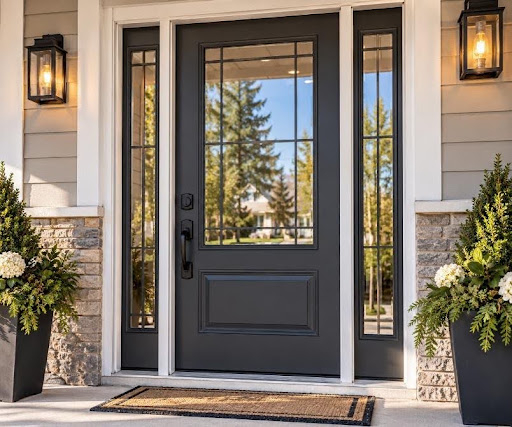
Your exterior doors are used every day, often without much thought — until something stops working properly.
A door that sticks, lets in a cold draft, becomes difficult to lock, or starts showing signs of moisture can quickly become frustrating. Some problems are caused by normal wear, while others can point to issues with the door, frame, hardware, or window installation.
Knowing what to look for can help you determine whether your door needs a simple adjustment or whether it may be time to consider replacement.
Here are some of the most common exterior door problems homeowners experience.
Your Door Sticks or Rubs Against the Frame
An exterior door should open and close smoothly without needing to be pushed, pulled, or lifted into position.
If your door suddenly starts sticking, rubbing against the frame, or becoming difficult to close, several things could be happening. Hinges can loosen over time, the door may shift slightly, or changes within the surrounding structure can affect how the door sits in its opening.
Seasonal temperature and humidity changes can also affect certain door materials.
Occasional minor adjustments may solve the problem. However, repeated sticking or significant misalignment deserves a closer look.
You Can Feel a Draft Around the Door
Stand near your exterior door on a cold or windy day. If you can noticeably feel outside air coming through the edges, the door may not be sealing properly.
Drafts can develop because of:
- Worn or damaged weatherstripping
- Gaps between the door and frame
- An improperly adjusted door
- Problems around the threshold
- Deterioration of the existing door system
These gaps can make the area around your entrance uncomfortable and allow conditioned indoor air to escape.
Replacing weatherstripping may solve some problems, but persistent drafts can indicate a larger issue.
The Door Doesn't Latch or Lock Properly
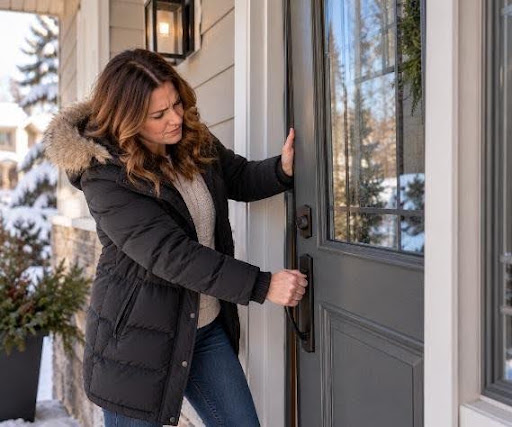
You shouldn't have to push against your door, pull on the handle, or lift the door just to lock it.
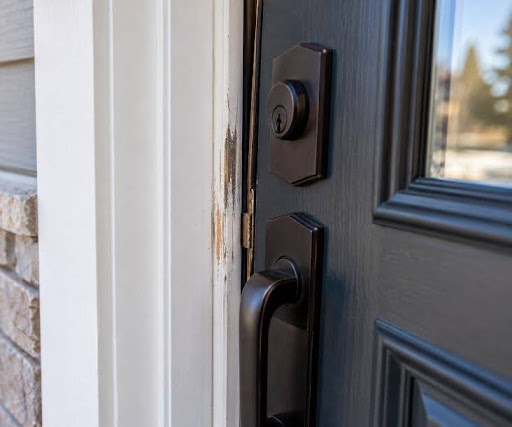
When the latch and strike plate no longer line up correctly, locking the door can become difficult. The cause could be loose hardware, hinge movement, misalignment, or changes to the door and frame.
Because your exterior doorsare an important part of your home's security, locking problems shouldn't be ignored.
If adjustments don't correct the issue, it may be time to have the complete door system assessed.
Daylight Is Visible Around the Edges
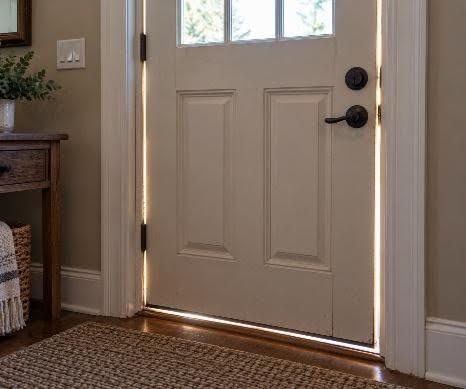
Here's a simple way to spot a potential sealing problem: look at the door when it's closed.
If you can see daylight around the perimeter, there's a gap.
Those openings can allow more than light into your home. Depending on their location and size, they may also contribute to drafts, moisture infiltration, insects, and reduced comfort.
A properly installed exterior door should fit securely within its frame and create a consistent seal when closed.
Water Is Getting Around the Door
Moisture around an exterior door deserves attention.
You might notice water near the threshold after heavy rain, staining around the frame, damaged flooring, peeling finishes, or deterioration near the bottom of the door.
The source isn't always the door itself. Exterior caulking, flashing, drainage, the threshold, and surrounding construction can all play a role.
Finding the source is important because repeatedly wiping up the water doesn't address what's allowing it inside.
The Bottom of the Door Is Damaged
The lower portion of an exterior door and frame can take a lot of abuse.
Snow, rain, dirt, road salt, wet boots, and repeated exposure to moisture can all affect the entrance over time.
Watch for signs such as deterioration, swelling, cracking, peeling finishes, soft areas, or damage around the sill and threshold.
Minor cosmetic wear is one thing. Damage that affects how the door seals, closes, or protects the opening is more significant.
The Hinges Are Loose or Noisy
Squeaking isn't usually a major concern on its own, but hinges can tell you quite a bit about how a door is operating.
Loose screws or worn hinges can cause a door to sag. Once that happens, you may notice the door rubbing, an uneven gap around the frame, or difficulty lining up the lock.
Hardware maintenance or adjustment may solve the issue if the door itself is still in good condition.
If the door repeatedly falls out of alignment, however, there may be another underlying problem.
The Glass Is Foggy Between the Panes
Many entry doors include decorative or clear insulated glass.
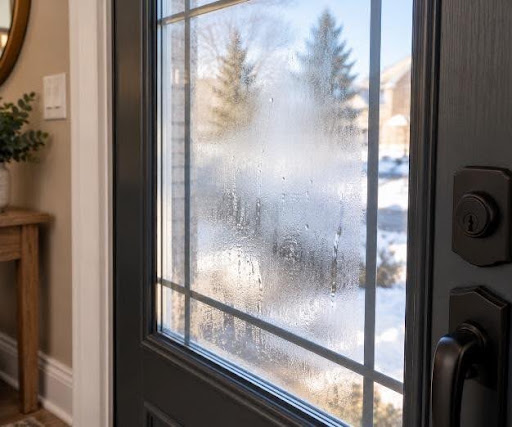
If you notice persistent fogging or moisture between the panes rather than on the interior surface, the insulated glass unit may have experienced a seal failure.
This is different from normal condensation that can appear on the room-side surface of glass.
A failed sealed unit can affect visibility and the insulating performance of the glass.
The Door Slams or Swings on Its Own
Does your door slowly swing open after you let go? Does it want to close on its own even when there isn't a strong draft?
This can indicate that the door isn't sitting properly level or plumb within the opening.
It doesn't automatically mean replacement is necessary. An adjustment may correct the problem.
But when it's combined with sticking, uneven gaps, or locking problems, it's worth having the entrance inspected.
The Threshold Has Become a Problem
The threshold at the bottom of your door plays an important role in creating a seal.
Over time, it can become worn, damaged, loose, or improperly positioned. You may notice a draft near the floor, water entering during bad weather, or a visible gap beneath the door.
Because thresholds are stepped on constantly and exposed to exterior conditions, they're an area homeowners should periodically inspect.
Your Door Has Become Difficult to Use Every Day
Sometimes there isn't one dramatic problem.
Instead, several smaller frustrations begin adding up.
Maybe the handle is loose. The door needs an extra push to close. The lock doesn't line up perfectly. Cold air comes through one corner. The finish is deteriorating.
Individually, these issues may seem minor. Together, they can indicate that the entrance is reaching the point where continued repairs may no longer make sense.
Repair or Replace?
Not every problem requires a brand-new door.
Loose hardware, worn weatherstripping, and minor adjustments may be repairable. On the other hand, significant deterioration, ongoing water problems, repeated alignment issues, poor sealing, or multiple problems occurring together may make replacement worth considering.
The age of the door matters too. Spending repeatedly on an older door that continues to cause problems may not provide the same long-term value as replacing the complete system.
Don't Ignore the Door Frame
Homeowners naturally focus on the door slab because that's what they see and touch every day.
But the frame is just as important.
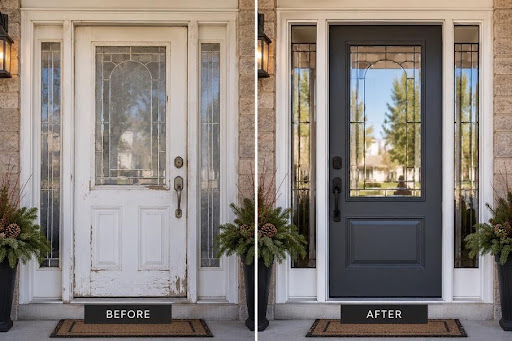
A beautiful new-looking door won't perform properly if there are problems with the surrounding frame, sill, installation, or opening.
When diagnosing an exterior door problem, it's important to consider the complete entrance system rather than focusing on a single component.
A Properly Working Door Should Feel Easy
You shouldn't have to think about how to use your front door.
It should open smoothly, close securely, latch without force, lock properly, and create a consistent seal around the opening.
When those basic functions start becoming daily frustrations, your door is telling you something.
At Complete Windows & Doors, we provide full exterior door replacements for homeowners throughout Barrie, Simcoe County, and into Muskoka. If an existing door installed by another company only requires a small repair, a dedicated door or glass repair specialist may be the more appropriate option. For homeowners dealing with an aging or poorly performing entrance, we can help determine whether a full replacement makes sense.
Frequently Asked Questions
Why is my exterior door suddenly hard to close?
Loose hinges, seasonal changes, misalignment, or movement around the opening can all affect how a door closes.
Does a draft mean I need to replace my door?
Not necessarily. Worn weatherstripping or a minor adjustment may be the cause, but persistent gaps or multiple problems can indicate a larger issue.
When should I consider replacing an exterior door?
Replacement may be worth considering when there is significant damage, recurring drafts, water infiltration, security concerns, or several ongoing problems with the door and frame.
October 2nd, 2026